Carrier Infinity Greenspeed in Santa Clarita
Quick take: Santa Clarita Carrier HVAC services Carrier Infinity Greenspeed systems across Santa Clarita, CA, in Valencia (91355) and Valencia Summit. We repair and install variable-speed 24VNA6, 26VNA1, and 25VNA4 units and resolve 178/179 faults, then call (213) 566-7218 or book online for $11,000-to-$16,000 install service.
Quick reference
- Covers Infinity Greenspeed AC (24VNA6, 26VNA1) and heat pumps (25VNA4, 27VNA3, 27VNA1, 27VNA0).
- Greenspeed modulates roughly 25-100 percent of capacity for quiet, even cooling.
- Requires the Infinity System Control (SYSTXCCITC01) over the ABCD communicating bus.
- Top-tier 24VNA6 reaches up to about 26 SEER; 25VNA4 up to about 22 SEER2.
- Inverter/communicating board repair $400-$2,000; variable-speed compressor at the high end.
- Installed cost for a full Infinity system typically $11,000-$16,000.
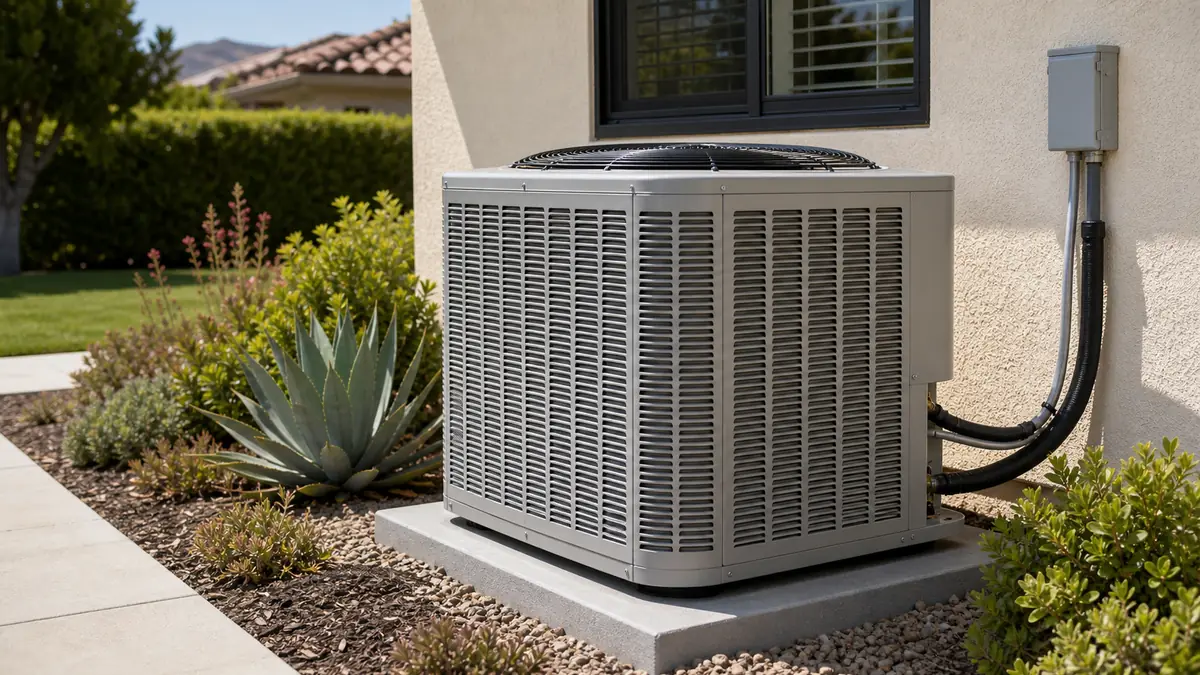
What is Greenspeed Intelligence, in plain terms?
Greenspeed is Carrier's variable-speed flagship technology. A standard single-stage condenser is either off or running flat-out; a Greenspeed compressor varies its speed to match the actual cooling load, often loafing along at a fraction of capacity. In the Santa Clarita Valley, where the system runs for hours on a 100 F afternoon, that modulation means lower draw during peak heat, much quieter operation, and steadier temperatures upstairs and down. The catch is that it only works with the Infinity System Control talking to the equipment over the four-wire ABCD bus.
| Symptom | Likely cause / first check | Cost lane |
|---|---|---|
| Runs single-speed, efficiency gone | Failed/replaced control or comm fault; codes 178/179 | $400-$2,000 |
| "System Malfunction" on touchscreen | ABCD wiring or water-damaged board | $400-$2,000 |
| Weak cooling, airflow warning | Code 44 air-delivery restriction; check filter/ducts | $225-$1,500 |
| Long runs, sensor fault flagged | Code 54 suction or 56 OAT/OCT thermistor out of range | $250-$600 |
| Voltage at run cap, no compressor call | Code 73; check contactor, relay, and wiring | $150-$450 |
| Compressor fault on inverter unit | Verify inverter PCB before condemning compressor | $1,200-$3,500 |
Why does my Greenspeed system lose its variable speed?
The number one reason is a control problem. If a previous tech or homeowner swapped in a generic thermostat, the system has no way to command modulation and falls back to single-speed, quietly erasing the efficiency you paid a premium for. The second reason is a communication fault: codes 178 (indoor) and 179 (outdoor) mean the Infinity control lost contact with a board. We meter the ABCD bus and line voltage before replacing anything, because a loose terminal or a rodent-chewed comm wire is a cheap fix that mimics a costly board failure. See our Infinity thermostat setup page for the wiring detail.
What are the Infinity Greenspeed models?
Greenspeed spans both air conditioners and heat pumps, and Carrier has run two naming generations that both show up in valley homes. All of them require the Infinity System Control to modulate:
- 24VNA6 (Infinity 26 AC). A recent flagship air conditioner reaching up to about 26 SEER. The pick for an owner who wants maximum cooling efficiency in this heavy-load valley.
- 26VNA1 (Infinity 21 AC). The current-naming variable-speed Greenspeed air conditioner, a step below the 26-SEER flagship but still fully modulating.
- 25VNA4 (Infinity 24 heat pump). Recent flagship heat pump, up to about 22 SEER2 and 10.5 HSPF2. Pairs Greenspeed cooling with efficient electric heat for an electrification changeout.
- 27VNA3 (Infinity 23) and 27VNA0 (Infinity 20) heat pumps. The current-naming Greenspeed heat-pump tiers, both variable-speed.
- 27VNA1 Ultimate Cold Climate. Sustains heat output at lower outdoor temperatures; rarely needed in the mild valley but available for the occasional cold-snap-sensitive install.
- Infinity System Control (SYSTXCCITC01). Not optional. The communicating touchscreen that unlocks modulation and full diagnostics; without it, every model above runs single-speed.
What do the Infinity fault codes mean?
The advantage of a communicating system is that it tells you exactly what is wrong, in a number and plain language, on the touchscreen. The codes we see most on valley Greenspeed systems:
- 178 / 179. Indoor and outdoor communication faults: the control lost its conversation with a board over the ABCD bus. Usually a loose terminal, a rodent-chewed wire, water in the outdoor board, or lost line voltage.
- 44. Excessive air-delivery restriction, the system flagging a dirty filter or leaky, undersized ducts before it ices up.
- 54 / 56. Suction temperature sensor and OAT/OCT thermistor out of range; inexpensive sensor swaps that prevent bad staging decisions.
- 73. Voltage sensed at the run capacitor with no call for the compressor, a wiring, relay, or contactor context on the outdoor family.
One caution: strings like 180, 187, or 286 that appear in some online lists are Carrier model or series numbers, not fault codes. The genuine communication codes are 178 and 179.
What does an Infinity install take in a Santa Clarita home?
A Greenspeed system is the most demanding Carrier install because the variable-speed payoff depends entirely on commissioning. In a valley tract home that means a few specifics. The ABCD communicating bus must be run with proper cable, not reused thermostat wire, or the system falls back to single-speed and the 178/179 faults appear. The charge has to be weighed in exactly, since a variable-speed compressor is unforgiving of an overcharge. And the ducts matter more here than on any other tier: a Greenspeed unit modulating against 20-to-30-percent-leaky attic flex never finds its efficiency sweet spot, so duct sealing and adequate returns are usually part of the job. Title 24 Zone 9 then requires the permit and HERS verification of charge, airflow, and duct leakage.
Is an Infinity system worth it for a valley home?
For Santa Clarita's heavy cooling load, the variable-speed payback is real, but only on a system that is sized and ducted correctly. An oversized Infinity short-cycles and never reaches its efficiency sweet spot, so we always run a Manual J calc and check duct static before recommending the top-tier 24VNA6 over a mid-tier Infinity or a Performance two-stage. If you are replacing a dead builder unit, the heat pump install path with a 27VNA Greenspeed pairs the efficiency with electrification.
Common questions about Carrier Infinity Greenspeed
What makes Infinity Greenspeed different from a regular Carrier AC in Valencia?
Greenspeed Intelligence uses a variable-speed inverter compressor that modulates roughly 25 to 100 percent of capacity, paired with the Infinity System Control. Instead of slamming on at full speed, it ramps to match the load, which means quieter operation, better dehumidification, and lower runtime cost on long valley cooling days.
Why is my Greenspeed system only running at one speed?
Variable-speed modulation only works through the Infinity System Control over the ABCD communicating bus. If someone installed a generic thermostat, or comm codes 178/179 appear, the system reverts to single-speed and you lose the efficiency. We restore proper communication or replace the control to bring modulation back.
Are Infinity inverter board repairs expensive?
They can be. A communicating or inverter board on an Infinity system runs roughly $400 to $2,000 depending on the part, and the variable-speed compressor itself is at the high end of the $1,200 to $3,500 range. We always verify the comm wiring and control first, because a cheap wiring fault can mimic an expensive board failure.
Is a 26 SEER2 Infinity worth the premium in Santa Clarita?
In a valley with 55 to 75 days a year over 90 F, the long runtimes make a high-SEER2 variable-speed system pay back faster than it would on the coast. Whether the top-tier 24VNA6 or a mid-tier Infinity makes sense depends on your home's load and ducts, which we confirm with a Manual J calc.
Why is my Greenspeed system so much quieter than my neighbor's AC?
Because it spends most of its runtime loafing at a fraction of capacity instead of slamming on at full speed. A single-stage condenser is either off or running flat-out, which is the loud cycle you hear next door; a Greenspeed compressor ramps gently to match the load, so it runs longer but far quieter, especially overnight.